


english version below
+ “Ghost of the Golden Groves”. In conversation with Harun-Al-Rashid
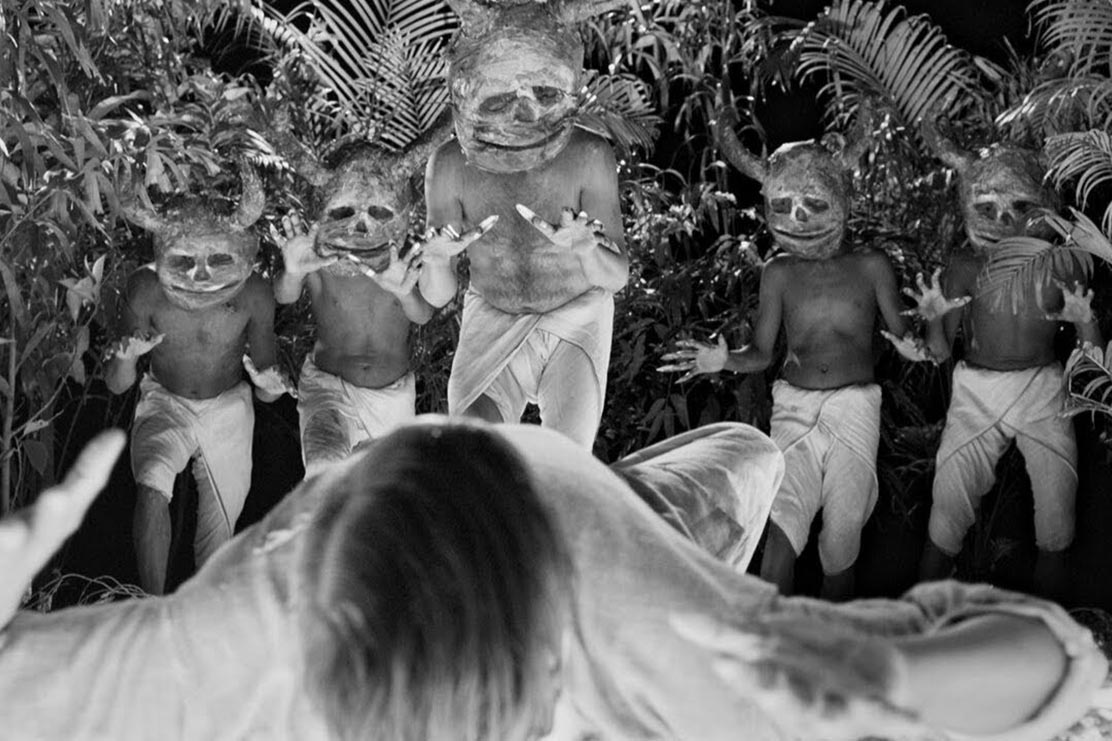
Anomalo e destabilizzante, onirico e ironico questo Ghost of the Golden Groves, l’unico film bengalese presente al Festival du nouveau cinéma di Montreal (ottobre 2019). Girato a quattro mani, in due episodi e con tante influenze. Sul bosco state of mind. Luogo di smarrimento della psiche prima che del corpo. Ci si svapora, nella propria introversione, sia andando dal dentro al fuori che dal fuori al dentro. Il concetto è raddoppiato, ribaltato, shakerato. Le due storie di cui si compone sono l’una specchio dell’altra: dalla civiltà al fogliame misterioso la prima, dalla vegetazione al vegetativo della casa la seconda. Vieni, c’è una casa nel bosco… Casa horror, con fantasma femminile, attraente donna di casa, emblema di sistemazione per un homeless in cerca di padrone. Pure la messa a norma, non soltanto l’anormalità, sballa. Difatti, in entrambe le opposte complementari vicende squilla una sirena d’allarme e le voci in e off richiamano i rispettivi protagonisti maschi all’alterità altera, ad essi aliena. Prima che si materializzino inquietanti eppur buffe creature mascherate, che sembrano provenire, nel primo episodio, da un testo di antropologia tribale; nel secondo, da un futuro immaginato nel passato, carosello anni ’60, film fanta-asiatico anni ’70, videoclip anni ’80. Tali creature, denominate nei titoli the others, colorano il film in bianco e nero, lo virano nel pink delicato del frappè alla ciliegia, dopo intermittenti tinte rosate e azzurrine, anche tendenti al viola e con qualche goccia di giallo, determinate dall’apparizione del fantasma.
È un dittico riflettente e auto-riflettente, soprattutto uno specchio del cinema, declinato in una serie di espressioni che lo implicano, lo anticipano, lo rinnovano e lo trascendono. Ci sono il viaggio e quindi i mezzi di locomozione come elementi filmici, pro e pre. Collocati cioè davanti alla macchina da presa, e simbolicamente posti nell’immaginario che combacia con le prime immagini in movimento (carretti e treni Lumiére). Conducono in un viaggio-trip tra luce e buio. Dentro di sé, all’interno dello stesso film elettrico, perturbatore, oltre che addomesticatore dell’inconscio. L’epoca di svolgimento mescola il tempo in un generico nuovo, sempre vecchio rispetto al futuro. Per tramite di qualche dettaglio, crediamo d’essere nel dopoguerra avanzato, tra i ‘50 e i ’60. Nella diegesi, subentra la Nūberu bāgu (nouvelle vague) made in Japan. Un racconto anni ’30 di Bibhutibhushan Bandyopadhyay, restituito nel secondo episodio, è cronologicamente sconvolto da una bossa nova del 1964 (Samba de Verão di Marcos Valle) ascoltata però in una versione in inglese del nuovo millennio (quella 2001 di Stacey Kent). Per giunta, su un 33 giri e con grammofono a manovella!
L’intento è evocare un’epoca multistrato della riproducibilità tecnica di massa, suggerire aure perdute o ritrovate, disseminare dubbi sull’essere/non essere, apparire, rappresentare. E giocare. Senza tempo e tanto spazio, dentro cui stipare molta arte, soprattutto para-cinematografica, di prima, di dopo, e persino durante (tutta la grammatica esibita di strappi e motion, uscite dal film e rientro in sala). Sfilano la pittura rupestre e l’architettura in quanto estasi del movimento; la musica e il suono forieri di visioni; il rito e il mito congiunti attraverso il teatro; il videoclip che rincorre la video-arte digitale e retrocede a performance e happening analogici. Naturale, e naturalmente unheimlich, che su tutto presieda l’Inland Empire: la mente, il sogno. Pre-cinema all’alba dell’uomo e post-cinema che a tutto può attingere. All’io, al sé, alla psicosi, alla metempsicosi. In un capolavoro d’ultra-modernità del cinema indiano, Om Dar-B-Dar (1988) di Kamal Swaroop, si diceva che più è «vecchio» il film, più diventa religioso. Accede cioè ai segreti, ai simboli dell’umanità, agli dèi nascenti. A una lingua mai morta. All’avant-garde del passato ancestrale. David Lynch, che è uno dei referenti del film, insegna. E insegna, com’è noto, anche attraverso il buddismo, lo yoga, le dottrine arcane, la meditazione trascendentale. Scuole di paradossi, d’illogica logica, di vuoto pieno. E di pieno profondo. «La felicità risiede in ciò che è sconfinato. Non vi è felicità nel piccolo» cita, dalle Upanishad, nel suo Catching the Big Fish (In acque profonde, 2006).
A ideare, filmare e firmare questa rigogliosa foresta estetica (più che boschetto, sia pur dorato) è un duo di Calcutta di cinema polimorfo (The Polymorph è pure il titolo del primo episodio). Harun-Al-Rashid il nome della band. Omaggiano il califfo abbaside de Le Mille e una Notte, anch’egli pluriforme cultore di arti intrecciate, ideatore di una babelica «Casa della saggezza», biblioteca interdisciplinare in cui smarrirsi. Nelle più svariate discipline si perdono, per ritrovarsi, pure i due autori, che nel cinema lasciano confluire i loro molteplici interessi. La produttrice di cinema pop Roshni Sen, studi in sociologia e vivo interesse per i cultural studies e la postcolonial theory, e il musicista, cantante, artista visivo e graphic designer Aniket Dutta, cinefilo oltre che cineasta. Quest’ultimo, che firma pure la musica e (alcuni) costumi, ha avuto come zio Salil Chowdhury, nome sommo del soundtrack indiano, con 200 colonne sonore alle spalle (dal 1949 al 1995) e una smisurata attività discografica extra-cinema. Tanto variegato background non poteva che rendere questo lungo d’esordio una plurima esperienza sensoriale, a più strati di sguardo, non soltanto maschile/femminile, Shiva/Shakti.
Lo sguardo si confonde sin dall’incipit. The Polymorph, scritto da Aniket Dutta, è viaggio allucinogeno, altera mente e corpo. Prima dei titoli, mostra Promotho (Joyrak Bhattacharjee) sui binari, in procinto di partire. Dopo i titoli, è su un carretto, con un lume, trasportato all’interno di una fitta e oscura selva (la foresta di Sonajhuri a Bopur, nel Bengala occidentale, il cui significato letterale è proprio «boschetto d’oro»). Dal fogliame giungono bagliori poltergeist, «la luce verde di un semaforo». Ma il film è in b/n e nessuno quindi, neanche i personaggi dentro lo schermo, può vedere a colori. Lo specifica il conducente del carretto (Satish Shaw), nocchiero di un inferno nosferatu, in una variazione dello straniamento dei fotogrammi in negativo nel capolavoro di Murnau. È certo che l’uomo, giunto fin lì da Calcutta per costruire strade, per mettere in ordine, si sta addentrando in qualche disordinato cuore di tenebra, oltre che nella rappresentazione bizzarra di una rappresentazione misteriosa.
Mentre mastica cibo, il montaggio gli affianca l’incedere ritmico parallelo di un macchinario. E il suo bere combacia col liquido versato in un’ampolla. È un uomo-macchina di scienza. La macchina da presa lo scruta e lo paragona, lo decostruisce e ricostruisce. Gli ultrasuoni ipnotici dello score mettono in evidenza l’ABC illustrato del cinema, denudano il linguaggio visivo. La vera minaccia viene dagli autori, che intrappolano il personaggio nel film, bloccandolo in un fermo immagine. Aggredendolo e aggregandolo a suoni e visioni extra, da un altro spaziotempo. Jump-cuts, techno-dance e voci esterne allarmano lui quanto lo spettatore, entrambi piombati dal grove al groove, in una discoteca tra gli alberi. Il culmine è una composizione digitale a pieno schermo, con al centro un triangolo. La totalità terra-cielo-uomo? La terna corpo-anima-spirito? O la triade uomo-padre-madre che, difatti, gli si materializza? In una parete della capanna, dove vivono i tre, gli si presenta il disegno ancestrale di cinque demoni che inseguono un uomo. È il pentagono di cinque nuovi, risemantizzati sensi, il suo destino. Quando gli si rompe il caricatore della macchina fotografica e per ripararlo chiede aiuto a un tipo che sembra meno selvaggio degli altri, si vede offrire ago e filo, un martello. L’uomo gli cita poi tre registi giapponesi, un’altra trinità-triangolo (Suzuki, Shindō, Teshigahara).
In un altro momento, nell’incontrare il polimorfo del titolo, Komol Mete (Bidyut Das), di fatto un attore folk che recita con la maschera, anche senza pubblico, forse un doppio di sé stesso, ecco che a distanza, nell’inquadratura, qualcuno, coperto dalle foglie stramazza a terra, oppure prega, o compie un rito magico: le sue membra sono impercettibili e visivamente intermittenti, un piccolo punctum barthesiano che solletica l’occhio, turbandolo. Dai titoli di coda apprendiamo che sta auto-seppellendosi. È un probabile traslato di Promotho incatenato, delle frane danzanti del suo io. Il tre-triangolo è lo scatto in avanti, la duplicità sepolta. Siamo dunque dentro un’avventura di logica differente, certo lungi dalla razionalità un po’ arida dell’ordinatore sociale che rappresenta il personaggio, possessore del fuoco distruttivo della civiltà. Promotho Prometeo? Promotore promanante? Progressista prominente, di sicuro, con lo spirito miasmatico dell’uomo d’affari. Il film lo precipita allora tra gli spiriti, nel caos e nella magia. Sciamani, riti con caprone e gallo, cerchi, col fuoco al centro, per dirimere controversie dove A è improvvisamente diventato non-A. Il bosco da disboscare torna luogo incantato archetipico e ingloba nel suo labirinto selvaggio, fatto d’ombre e luccicanze, il povero eroe affetto da automatismo urbanizzato. Il dispotico scaraventato nel distopico.
Nel secondo episodio, che adatta e prende il titolo da un racconto fantastico (Maya) di Bibhutibhushan Bandyopadhyay (l’autore della Trilogia di Apu portata sullo schermo da Satyajit Ray), viene proseguito, al rovescio, il senso del primo. Stavolta è il cuoco disoccupato Bibhuti (Soumyajit Majumdar), abitante della foresta, a diventare custode di una magione con incolto giardino di proprietà di un uomo di Calcutta (Jayanta Banerjee), che viene e va. Lo avvertono che gli altri custodi sono spariti nel nulla, proprio come i costruttori di strade dell’altro episodio. E anche qui, a un certo punto, il protagonista, pari all’altro, si ritrova da solo. Il padrone torna in città, uguale al custode dell’alloggio dove risiedeva Promotho. Se quest’ultimo sprofondava nella selva oscura, Bibhuti è invece risucchiato dalle pareti domestiche di una casa sexy. Già al suo arrivo, un leggero carrello indietro e l’obiettivo in avanti ad assestare visivamente l’imponente architettura della dimora, lo aveva un po’ circuito, fortemente incantato. La stanza tutta per sé, con la parete decorata di animali e figure geometriche (incluso il triangolo), vorrà nuovamente dire qualcosa? Quell’elefante è la memoria? Il parallelo tra lui e un serpente disegnato altrove, in un muro sotto le arcate, viene indubbiamente accentuato. Probabile che sia il serpente abissale Ananta, protettore del sonno e del sogno (creatore) di Vishnu. Lo stesso dio che soccorre l’elefante, avvolto nel lago da un serpente. Anche il custode incontra il padrone nel lago ed è altresì immerso tra il sonno e la veglia, in un clima onirico sospeso, che introduce il colore, anch’esso da sogno, nel film. Quel colore, non in campo, visto solo da Promotho nel primo episodio? E qui irrompe un fantasma di donna, fantasma (forse) d’amore (Debleena Sen). La probabile stabilizzazione erotica, familiare che chiama a sé il viaggiatore con valigia, in cerca di lavoro (uno scopo?) nel bosco/foresta. In ogni caso, l’uomo è curioso: perlustra, esplora. Sennonché, anche stavolta, il personaggio principale si ritrova stregato, dentro un vortice magico, fatto di voci, maschere, creature from the outer space, anch’esse sui graffiti della parete, di nuovo la sirena, di nuovo il triangolo (stavolta concreto, non digitale), e una serie di forme visive che lo imprigionano. In maniera meno cruenta, più seducendolo. E pure daranno la parola, un pubblico, a un nessuno senza voce come lui. Tra i presenti, c’è Promotho, adesso annullato nella maschera, tribalizzato. Linee parallele nella divergenza? Coincidenze degli opposti? Arcaici sotterfugi della psiche?
Ghost of the Golden Groves è un film sul mistero misterioso, sull’ignoto davvero ignoto: se fosse noto, che ignoto sarebbe? Quindi il mistero basta a sé stesso. Con la spiegazione verrebbe ricondotto a un ordine razionale dalla forza dimezzata. Niente più rivelazioni logiche, sia pure nel fantastico, nell’era delle certezze dissolute al punto di crearne delle nuove, inevitabilmente ridicole o rétro e comunque polverizzabili in un attimo (i conservatorismi assortiti, più o meno fascisti, della nostra epoca, i sovranismi hard, le fake news). Neppure Michael Haneke, Bruno Dumont, Apichatpong Weerasethakul, riflessi nei loro personaggi, scoprono l’assassino o decifrano il mistero. Tantomeno Lynch. Forse perché nulla (più) si sa? O sappiamo fin troppo e ci ostiniamo a non capire? Gettiamoci dunque a capofitto, Promotho o Bibhuti dell’al-di-qua, nel vortice elettrizzante di questo film avvolgente, spericolato e persino pericoloso, che ci volge altrove. Divertente, appunto. Benché deviante. Per farci ritrovare, dalla nostra sala, in quella sala/specchio dove alfine confluiscono tutti. Le maschere, i volti, le vittime, i fantasmi, i sogni. Per ripensare la costruzione di strade narrative. E attraversare l’architettura di una visione che ammanti.•
Leonardo Persia
+ “Ghost of the Golden Groves”. In conversation with Harun-Al-Rashid
Anomalous and destabilizing, ironic and dreamlike this Ghost of the Golden Groves, the only Bengali film presented at Montreal’s Festival du nouveau cinéma (Octber 2019). Four-handed direction, two episodes and many influences. It is about the forest as a state of mind. Place of loss of the psyche before the loss of the body. One can evaporate, in one’s introversion, going from inside to outside and from outside to inside. The concept is doubled, reversed, shaken. The two stories of which it is composed are each mirror of the other: from civilization to mysterious foliage the first, from vegetation to the vegetative of the house the second. Vieni c’è una strada nel bosco (Come, there is a house in the woods, Italian song)… Horror house, with a female ghost, an attractive housewife, emblem of accommodation for a homeless person looking for a master. Compliance also, not just abnormality, hurls. In fact, in both opposing complementary events an alarm siren rings and voices in and off recall the respective male protagonists to lofty alterity, alien to them. Before that some disturbing yet funny masked creatures materialize. They seem to come, in the first episode, from a text of tribal anthropology; in the second, from a future imagined in the past, advertising spot from the 60s, fantasy-Asian film from the 70s, video clips from the 80s. These creatures, called in the titles “the others”, color the film in black and white, turn it into the delicate pink of the cherry milkshake, after intermittent pinkish and blue hues, also tending to violet, and with some drops of yellow, determined by the appearance of the ghost.
It is a reflective and self-reflecting diptych, above all a mirror of cinema, declined in a series of expressions that implicate it, anticipate it, renew it and transcend it. There are the journey and therefore the means of locomotion as film elements, pro and pre. That is, placed in front of the camera, and symbolically placed in the imagination closer to the first moving images (carts and trains by Lumiére bros). They lead on a trip between light and dark. Inside himself, within the same electric film, a disrupter as well as a domesticator of the unconscious. The epoch of setting mixes time in a generic new, always old compared to the future. By means of some details, we believe we are in the advanced post-war period, between the ’50s and the’ 60s. In diegesis, Nūberu bāgu (nouvelle vague) made in Japan takes over. A 1930s tale by Bibhutibhushan Bandyopadhyay, adapted in the second episode, is chronologically shocked by a 1964 bossa nova (Marcos Valle’s Samba de Verão) listened to in an English version of the new millennium (a 2001 version by Stacey Kent). In addition, on a 33 rpm and with a crank gramophone!
The intent is to evoke a multi-layered era of mass mechanical reproduction, to suggest lost and found auras, to spread doubts about to be or not to be, to appear, to represent. And to play. Timeless but with lots of space, in which to cram a lot of art, especially para-cinematographic, before, after, and even during (all the grammar exhibited of rips and motion, exiting the film and returning to the theater). Rock painting and architecture parade as an ecstasy of movement; music and sound harbingers of visions; rite and myth combined through scene; video clip that chases digital video art and recedes to analogue performances and happenings. Naturally, and of course disturbingly, Inland Empire dominates everything: mind, dream are above all else. Pre-cinema at the dawn of man and post-cinema that can draw on everything. To ego, to self, to psychosis, to metempsychosis. In an ultra-modern masterpiece of Indian cinema, Kamal Swaroop’s Om Dar-B-Dar (1988), it is said that “the older the film, the more religious it becomes”. That is, it accesses secrets, symbols of humanity, nascent gods. To a language that never died. At the avant-garde of the ancestral past. David Lynch, who is one of the film’s referrals, teaches. And he teaches, as it is known, also through Buddhism, yoga, arcane doctrines, transcendental meditation. Schools of paradoxes, of illogical logical, of full emptiness. And full depth. “Happiness lies in what is boundless. There is no happiness in the small “he quotes, from the Upanishads, in his Catching the Big Fish (2006).
To design, shoot and sign this luxuriant aesthetic forest (rather than grove, albeit golden) is a polymorphic cinema duo from Calcutta (The Polymorph is also the title of the first episode). Harun-Al-Rashid is the name of the band. They pay homage to the Abbasid caliph of Arabian Nights, who was also a multi-lover of intertwined arts, creator of a babelic “House of Wisdom”, an interdisciplinary library in which to get lost. In the most varied disciplines, the two authors, who allow their multiple interests to merge into the cinema, also are lost to find themselves. Pop film producer Roshni Sen, coming from a sociology background with a keen interest in cultural studies and postcolonial theory, and musician, singer, visual artist and graphic designer Aniket Dutta, film buff as well as filmmaker. The latter, who also signs the music and (some) costumes, had as his uncle Salil Chowdhury, supreme name of the Indian film music, with 200 soundtracks behind him (from 1949 to 1995) and an immense extra-cinema recording activity. Such a varied background could only make this debut a multiple sensorial experience, with multiple layers of gaze, not only male/female, Shiva/Shakti.
The gaze is confused since the beginning. The Polymorph, written by Aniket Dutta, is a hallucinogenic journey, alters mind and body. Before the main title, it shows Promotho (Joyrak Bhattacharjee) on the tracks, about to leave. After the titles, he is on a cart, with a lamp, transported inside a dense and dark forest (the Sonajhuri forest in Bopur, West Bengal, that means just “golden grove”). Poltergeist flashes come from the foliage, “the green of a traffic light”. But the film is in b/w and therefore no one, not even the characters inside the screen, can see in color. This is specified by the cart driver (Satish Shaw), helmsman of a nosferatu hell, in a variation of the estrangement of the negative frames in Murnau’s masterpiece. It is certain that man, who came from Calcutta to build roads, to put things in order, is going into some disordered heart of darkness, as well as in the bizarre representation of a mysterious representation.
As he is chewing his food, the editing alternates the parallel rhythmic pace of a machine. And his drinking matches the liquid poured into an ampoule. He is a science man-machine. The camera scrutinizes and compares him, deconstructs and rebuilds him. The hypnotic ultrasounds of the score highlight the illustrated ABC of cinema, baring visual language. The real threat comes from the authors, who trap the character in the film, locking him in a still image. Attacking and aggregating him to extra sounds and visions, from another spacetime. Jump-cuts, techno-dance and external voices alarm him as much as the spectator, both plunged from grove to groove, in a disco under the trees. The climax is a full screen digital composition with a triangle in the center. The whole earth-sky-man? The body-soul-spirit triad? Or the man-father-mother trio that, in fact, materializes? In one wall of the hut, where the three live, the ancestral drawing of five demons chasing a man is presented to him. It is the pentagon of five new, re-sanctified senses, his destiny. When the shutter of his camera breaks and he asks for help from a guy who seems less savage than the rest, he is offered a needle and thread, a hammer. Then the man mentions three Japanese directors, another triangle-trinity (Suzuki, Shindō, Teshigahara).
At another time, when the main character meets the polymorph of the title, Komol Mete (Bidyut Das), in fact a folk actor who plays with the mask, even without an audience, perhaps a double of himself, here at a distance, in the frame, someone, covered with leaves, who is falling on the ground, or praying, or performing a magic ritual: his limbs are imperceptible and visually intermittent, a small Barthesian punctum that tickles the eye, swirling it. From the closing credits we learn that he is self-burying himself. It is a probable translation of chained Promotho, of the dancing landslides of his ego. Three-triangle is forward step, buried duplicity. We are therefore in an adventure of different logic, certainly far from the somewhat arid rationality of the social authorizing officer who represents the character, owner of destructive fire of civilization. Promotho Prometheus? Promoter promanating? Prominent progressive, for sure, with the miasmatic spirit of a businessman. The film then precipitates him into the spirits, into chaos and magic. Shamans, rituals with billy goat and rooster, circles, with the fire in the center, to settle disputes where A has suddenly become non-A. The forest to be cleared returns to an enchanted archetypal place and incorporates into its wild labyrinth, made of shadows and glitters, the poor hero suffering from urbanized automatism. The despotic thrown into the dystopian.
In the second episode, which adapts and takes the title from a fantastic fiction novel (Maya) by Bibhutibhushan Bandyopadhyay (the author of the Apu Trilogy brought to the screen by Satyajit Ray), the sense of the first is continued in reverse. This time it is the unemployed cook Bibhuti (Soumyajit Majumdar), inhabitant of the forest, who becomes the keeper of a mansion with uncultivated garden owned by a Calcutta man (Jayanta Banerjee), who comes and goes. They warn him that the other caretakers have disappeared into thin air, just like the road builders of the other episode. And even here, at a certain point, the protagonist, like the other, finds himself alone. The owner returns to the city, the same way the caretaker of the accommodation where Promotho resided. If the latter sank into the dark forest, Bibhuti is instead sucked into the domestic walls of a sexy house. Already on his arrival, a slight traveling shot backward and focal lens of camera forward, to visually settle the imposing architecture of the dwelling, got him a little snared, strongly enchanted. Will the room itself, with its wall decorated with animals and geometric figures (newly including triangle), mean something again? Does that elephant represent memory? The parallel between him and a snake drawn elsewhere, in a wall under the arches, is undoubtedly accentuated. Probably it is the abyssal serpent Ananta, protector of sleep and (creating) dream of Vishnu. The same god who rescues the elephant, wrapped in the lake by a snake. Even the caretaker meets the master in the lake and he is also immersed between sleep and wakefulness, in a suspended dreamlike atmosphere, which introduces the color, also dreamlike, in the film. Maybe that color, off-screen, seen only by Promotho in the first episode? And here comes a ghost of a woman, a ghost (perhaps) of love (Debleena Sen). The probable erotic, familiar stabilization that calls the traveler with a suitcase, looking for work (a purpose?) in the grove/forest. In any case, the man is curious: he searches, explores. And, once again, this main character falls under a spell, inside a magical vortex, made of voices, masks, creatures from the outer space newly drawn on the wall, again the siren, again the triangle (this time non-digital but concrete), and a series of visual forms that imprison him. In a less bloody way, more seducing him. And yet they will give the stage, an audience, to a voiceless nobody like him. Among those present, there is Promotho, now canceled in the mask, tribalized. Parallel lines in divergence? Coincidences of opposites? Archaic subterfuge of the psyche?
Ghost of the Golden Groves is a film about the mysterious mystery, about truly unknown unknown: if it were known, what unknown would it be? So the mystery is enough for itself. With explanation it would be brought back to a rational order with half the strength. No more logical revelations, albeit in the fantastic fiction: we are in the era of dissolute certainties to the point of creating new ones, inevitably ridiculous or retro and in any case pulverizable in a moment (the assorted conservatisms, more or less fascist, of our era, the hard sovereignties, fake news). Not even Michael Haneke, Bruno Dumont, Apichatpong Weerasethakul, reflected in their characters, find out the murderer or decipher the mystery. Least of all Lynch. Maybe because nothing (more) can be known? Or do we know too much and persist in not understanding? Let’s throw ourselves headlong, Promotho or Bibhuti from here, into the electrifying vortex of this enveloping, reckless and even dangerous film that turns us elsewhere. Funnily turning, indeed. Although deviant. To let us find ourselves, from our room, in that room/mirror where everyone finally flows. Masks, faces, victims, ghosts, dreams. To rethink the construction of narrative roads. And to cross the architecture of a vision that dresses you up.•
Leonardo Persia
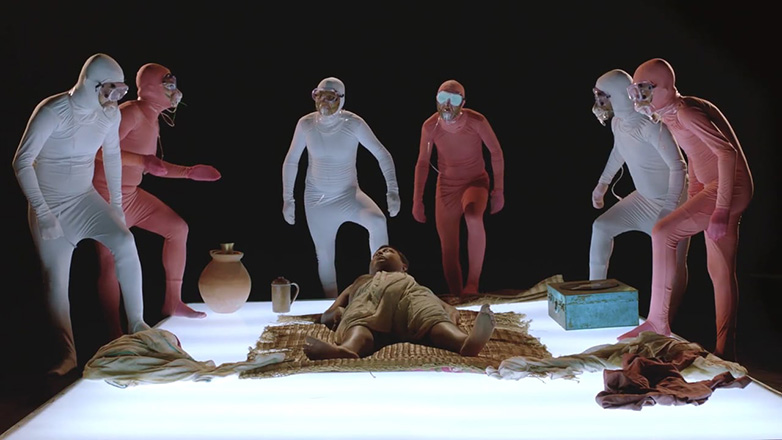
Shonajhurir Bhoot (Ghost of the Golden Groves)
Screenplay & Direction: Harun-Al-Rashid (Aniket Dutta & Roshni Sen) • Producer: Indrajit Roy • Co Producer: Roshni Sen & Aniket Dutta • Cinematography: Basab Mullick • Edit: Nikon Basu • Art: Viraag Desai • Sound Design: Sukanta Majumdar • Music: Aniket Dutta • Cast: Joyraj Bhattacharjee (Promotho Nath Biswas), Soumyajit Majumdar (Bibhuti), Bidyut Das (Komol Mete), Jayanta Banerjee (Nibaran Chakraborty), Debleena Sen (The Lady from the other world) • Shooting Mode: Black & White, Colour • Language: Bengali • Country: India • Year: 2019 • Runtime: 98 minutes
L'articolo che hai appena letto gratuitamente a noi è costato tempo e denaro. SOSTIENI RAPPORTO CONFIDENZIALE e diventa parte del progetto!

